Bridal portraiture is one of my favourite kinds of work. A recent studio session gave me the chance to photograph a Bengali bride through two completely different bridal looks in one afternoon. Specifically, a traditional red Banarasi saree, and a contemporary black bridal lehenga. If you’re looking for a Bengali bridal photographer Berlin couples trust, this is what that looks like in practice. Here’s a look inside how the session honours cultural tradition alongside a modern, editorial feel.
A Bengali Bridal Photographer Berlin Session, Built Around Tradition
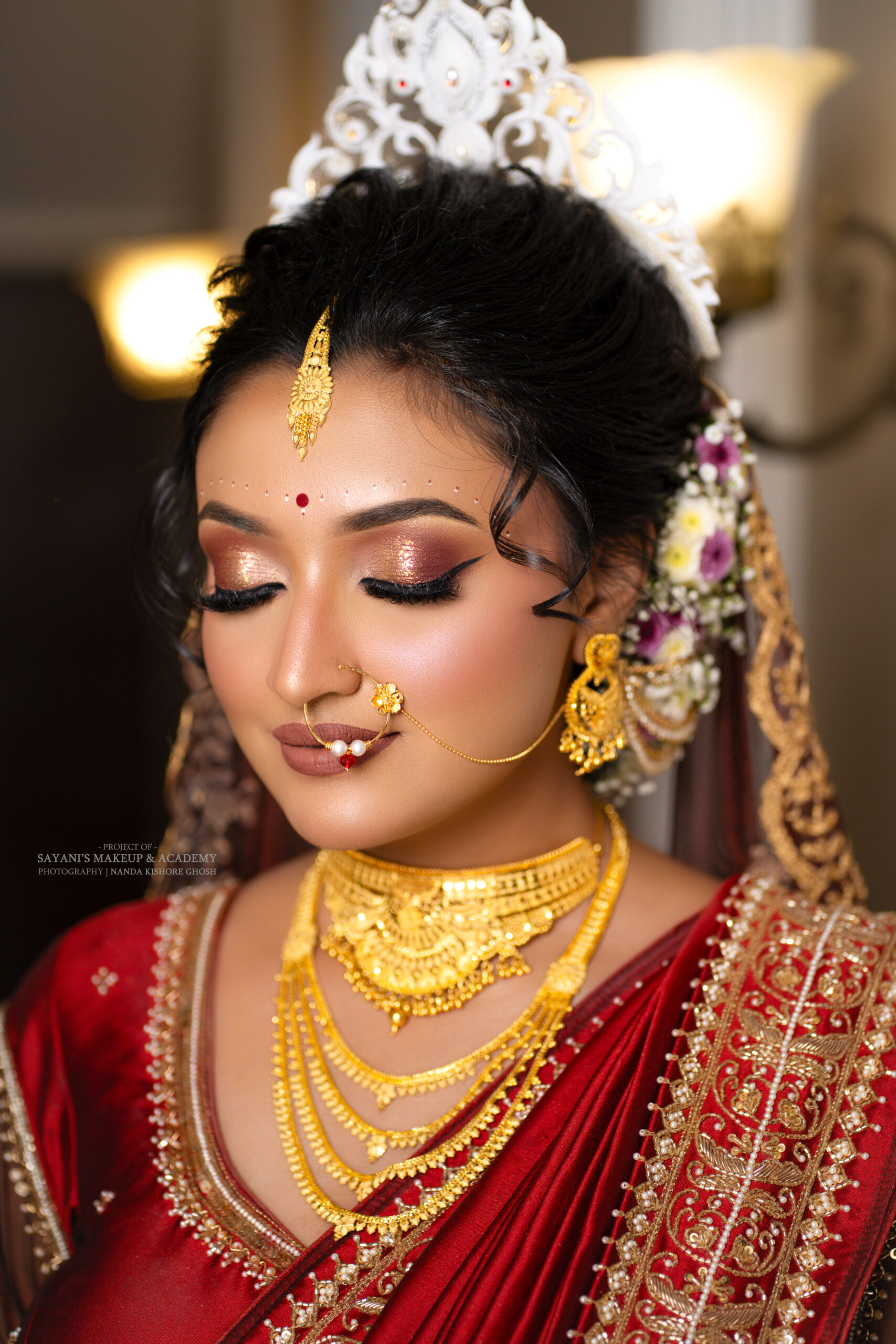
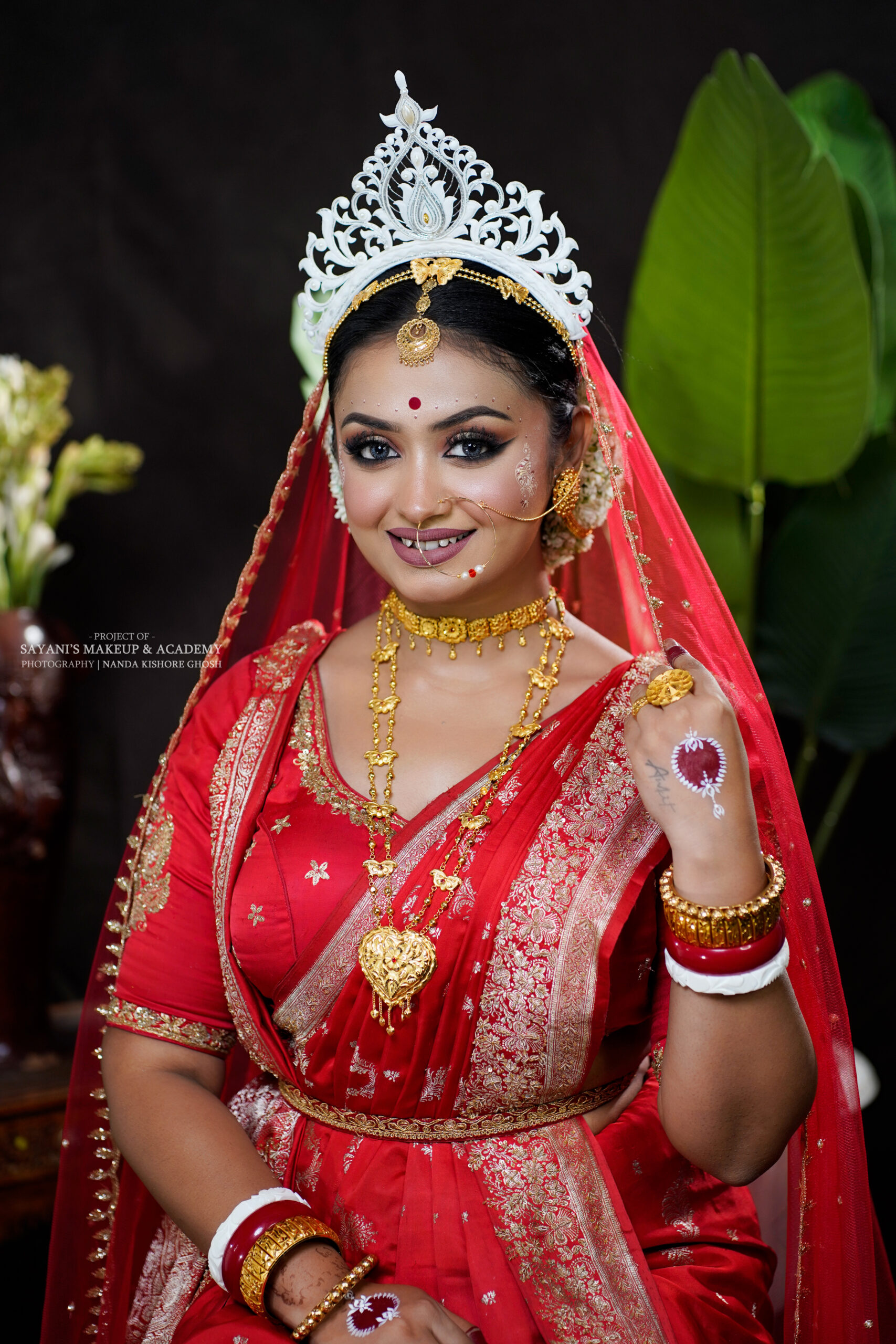
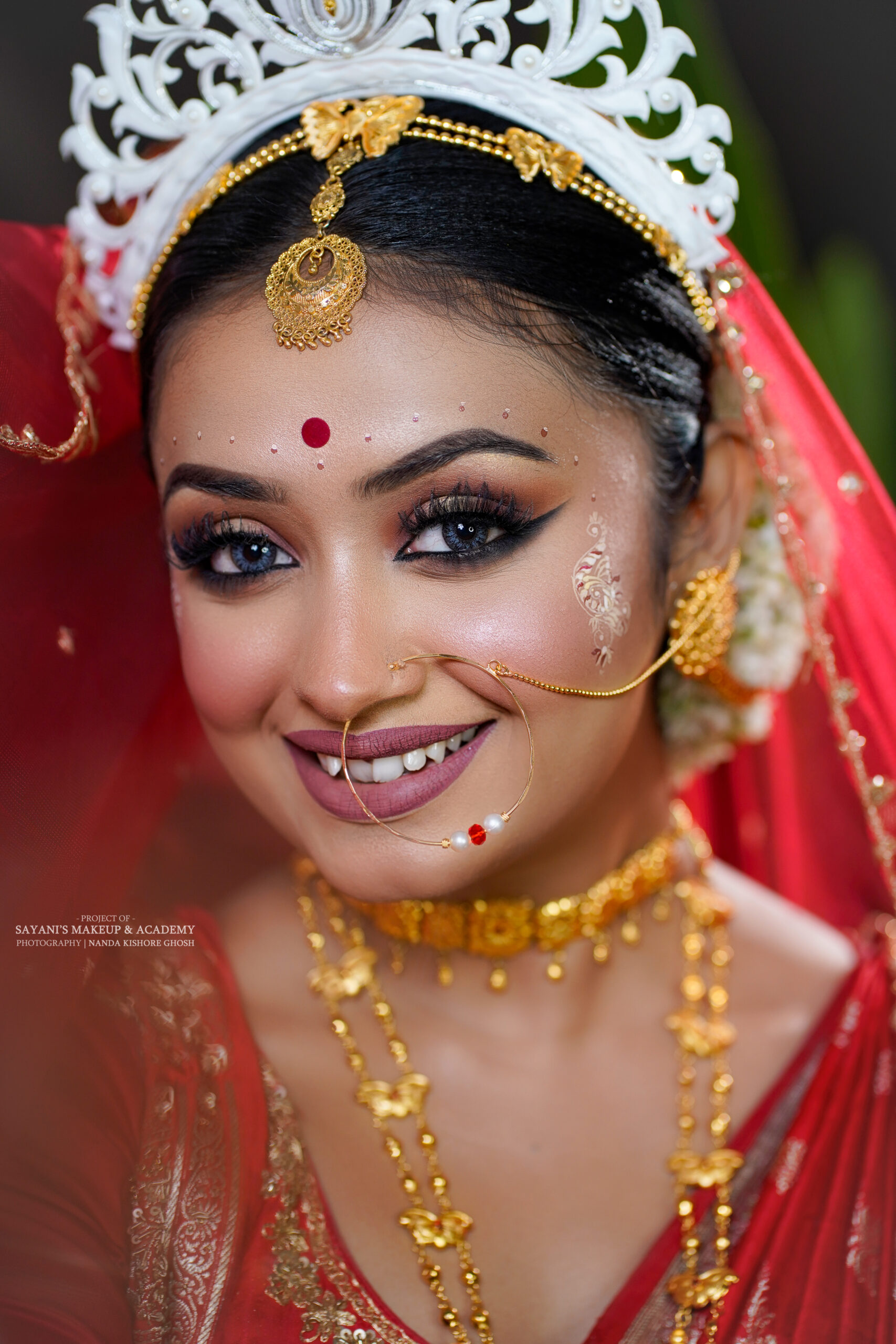
The first half of the session centred on classic Bengali bridal styling. Think a deep red Banarasi saree, layered gold jewellery, and a white shola mukut. Alongside that, the soft, warm studio lighting followed traditional Bengali wedding customs. The goal wasn’t just to document the outfit. Instead, it was to capture the quiet, composed energy that comes with it — the kind of portrait a family keeps for generations.
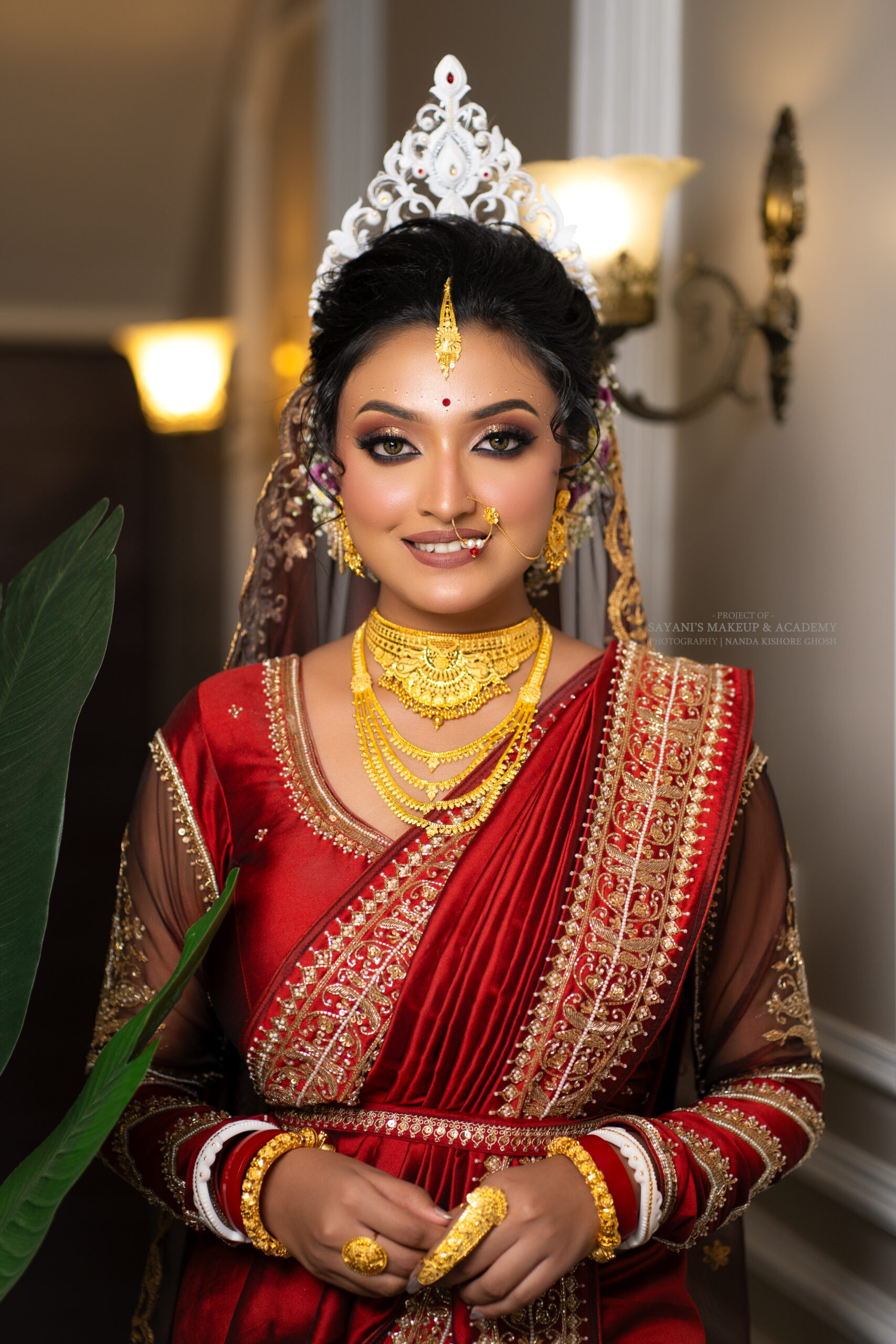
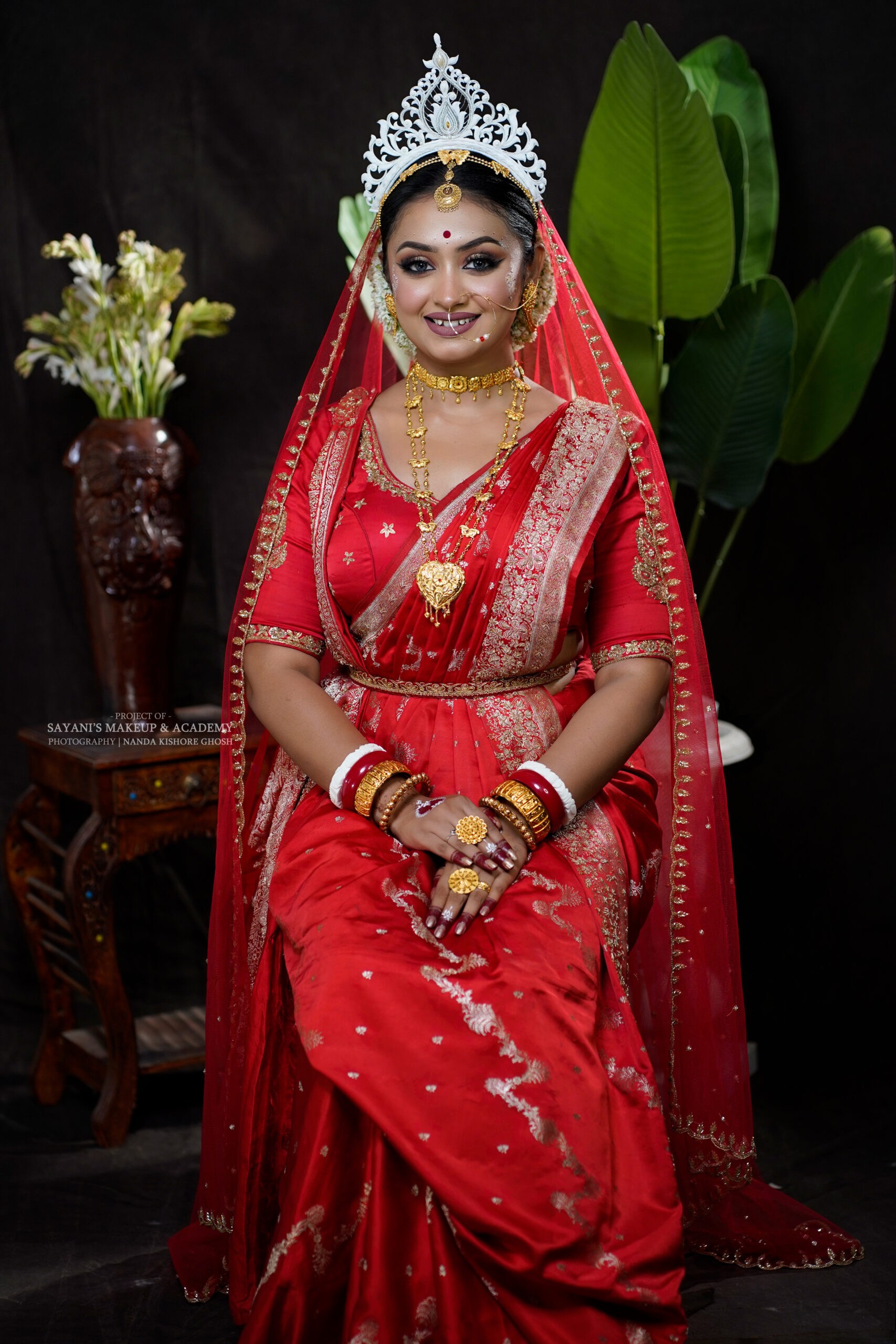
Close, intimate framing worked well here. Instead of a busy background, it let the detail in the jewellery, the mukut, and the makeup carry the image. For traditional bridal work like this, I always shoot a mix of full-length seated portraits and tighter beauty shots. That way, the final gallery has both the complete look and the finer details.
Two Looks, One Story: From Red Saree to Black Lehenga
Midway through the session, we moved into a second, entirely different bridal look. Specifically, a black embroidered lehenga with a sheer, embellished dupatta and statement polki jewellery. That’s where the shoot shifted from traditional bridal portraiture into something closer to luxury bridal fashion. Think soft prism light effects, moodier tones, and a more editorial pose language.
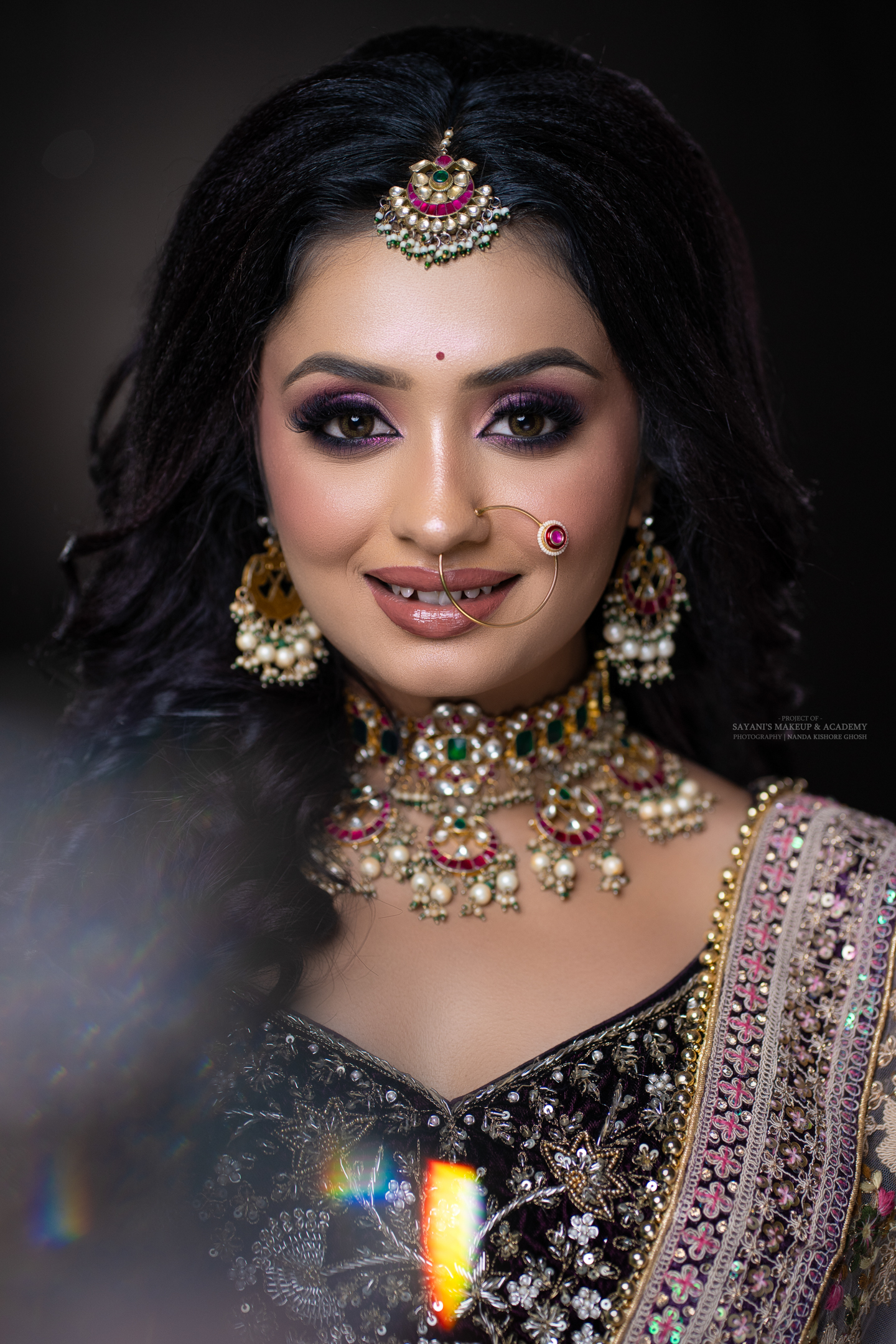
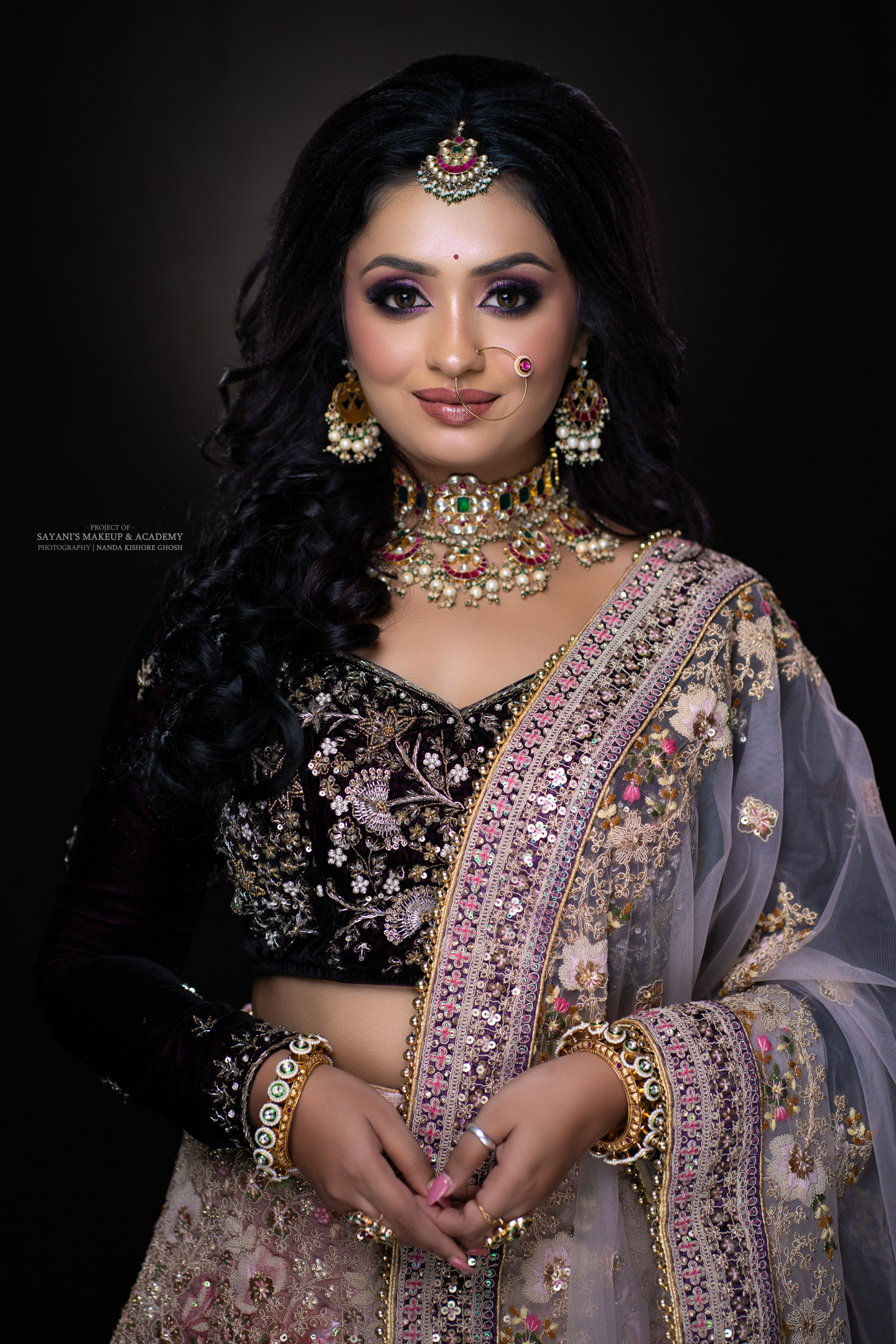
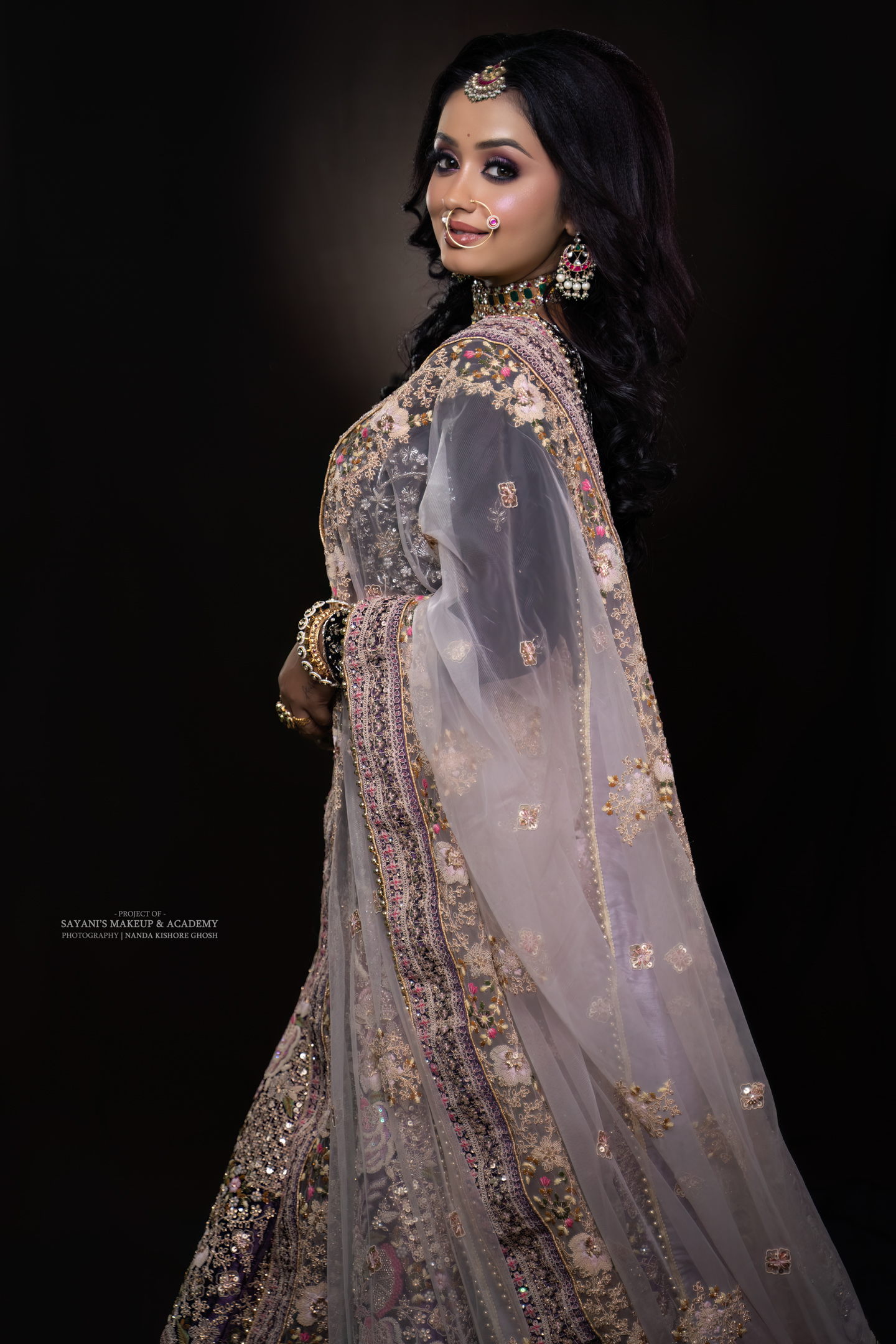
Pairing a traditional look with a fashion-forward one is something I’d genuinely recommend to any bride planning her portrait or pre-wedding session. As a result, you get a gallery with real range — images for the family album, and images that feel current and editorial for everything else.
Getting Every Detail Right: Styling, Makeup & Light
Above all, bridal portraiture lives or dies on detail. Gold jewellery and polki stones both reflect light very differently to skin and fabric. Because of that, lighting has to be adjusted look by look rather than left on one fixed setup. Working closely with the makeup and styling team beforehand made a real difference. That meant understanding which angles the jewellery was designed to be seen from ahead of time. It also meant knowing where the dupatta was meant to fall.